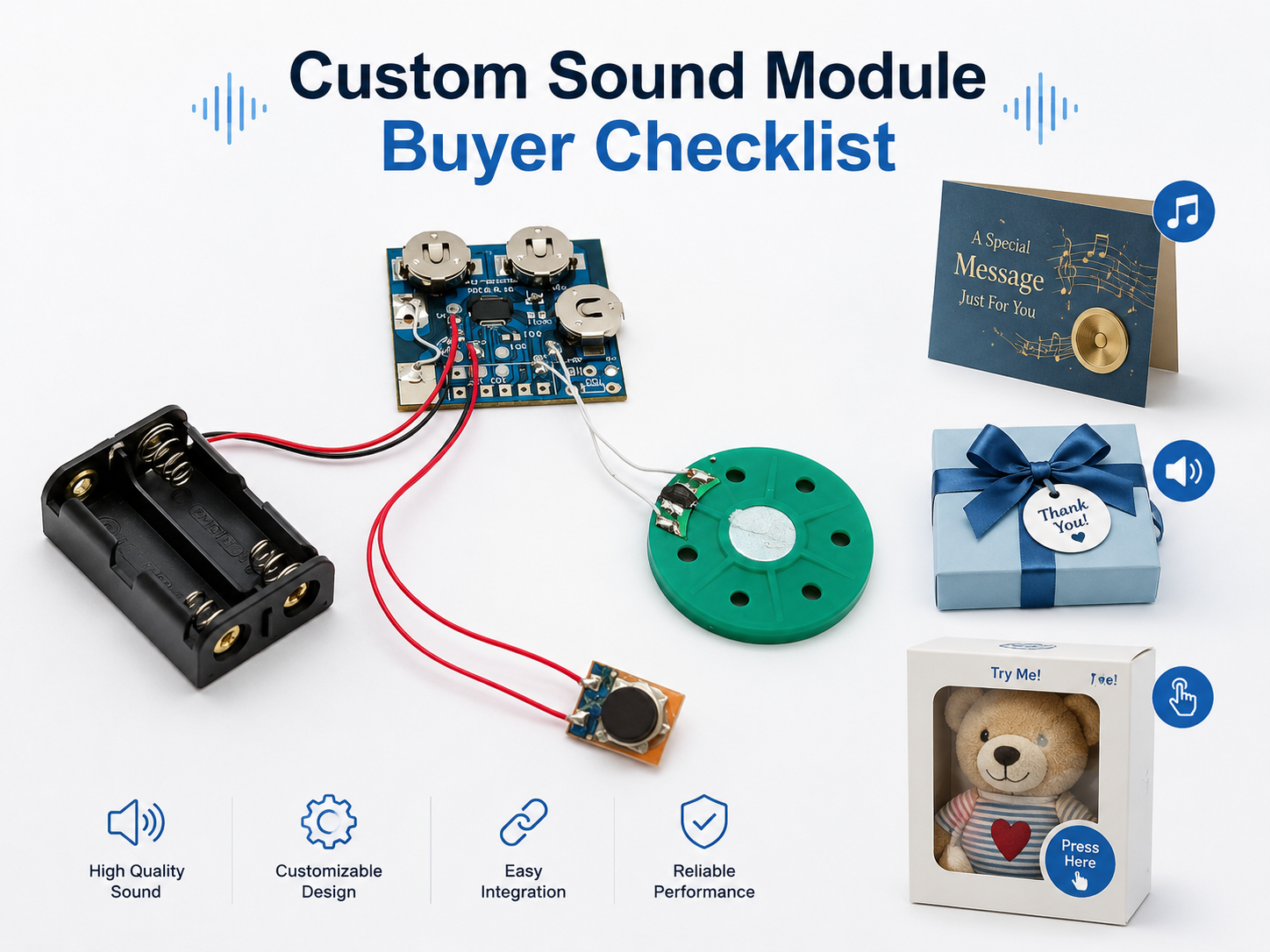
 Ordering a custom sound module involves more than choosing a recording and adding a speaker. The module must fit the product structure, play the correct audio, use a suitable trigger method and remain reliable after assembly.
For greeting card companies, toy developers, packaging suppliers and gift companies, confirming the technical requirements before sampling can prevent problems with sound quality, installation space, battery life and final product operation.
This custom sound module buyer guide explains the main specifications to prepare before requesting a quotation or sample.
The first step is to explain where the sound module will be installed.
Common applications include:
The application affects the module thickness, speaker size, battery type, wiring layout and trigger mechanism.
A module designed for a thin greeting card may not be suitable for a toy or rigid gift box. Always provide the available internal space and basic product structure before confirming the module.
Buyers should prepare the final audio file as early as possible.
Important details include:
Longer audio usually requires more memory and may affect battery consumption. The required file format should also be confirmed with the supplier before production.
Avoid using copyrighted music, voices or branded sound effects without proper permission.
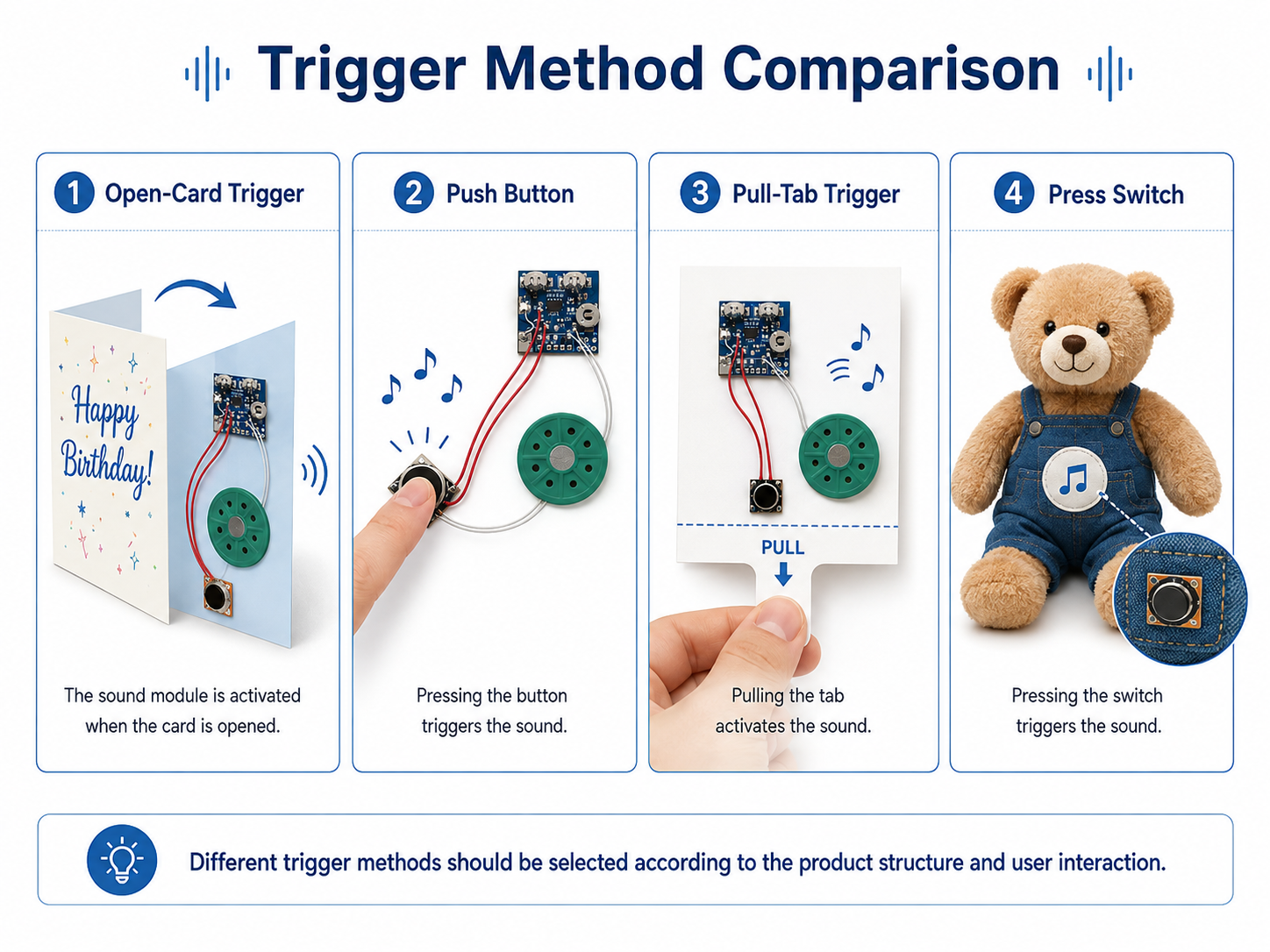
The trigger determines how the audio starts.
Common options may include:
For greeting cards, an open-card or pull-tab mechanism may be practical. For toys, packaging or displays, a button or custom switch may be more suitable.
The trigger method must match the product structure. Buyers should provide a drawing, mock-up or clear installation description so the supplier can evaluate whether the switch can operate consistently.
Speaker size and placement affect sound clarity.
A speaker may sound different after it is covered by paper, fabric, foam or plastic. If the speaker opening is blocked, the final product may sound quieter than the sample module tested outside the product.
Before sampling, confirm:
For packaging and toys, the surrounding structure should leave enough space for sound to escape without damaging the visual design.
The battery should be selected according to the audio duration, expected number of plays and product life cycle.
Buyers should clarify:
Battery size also affects module thickness. A thin product may require a different power solution from a rigid box or toy.
Battery performance and transportation requirements should be confirmed according to the final configuration and destination market.
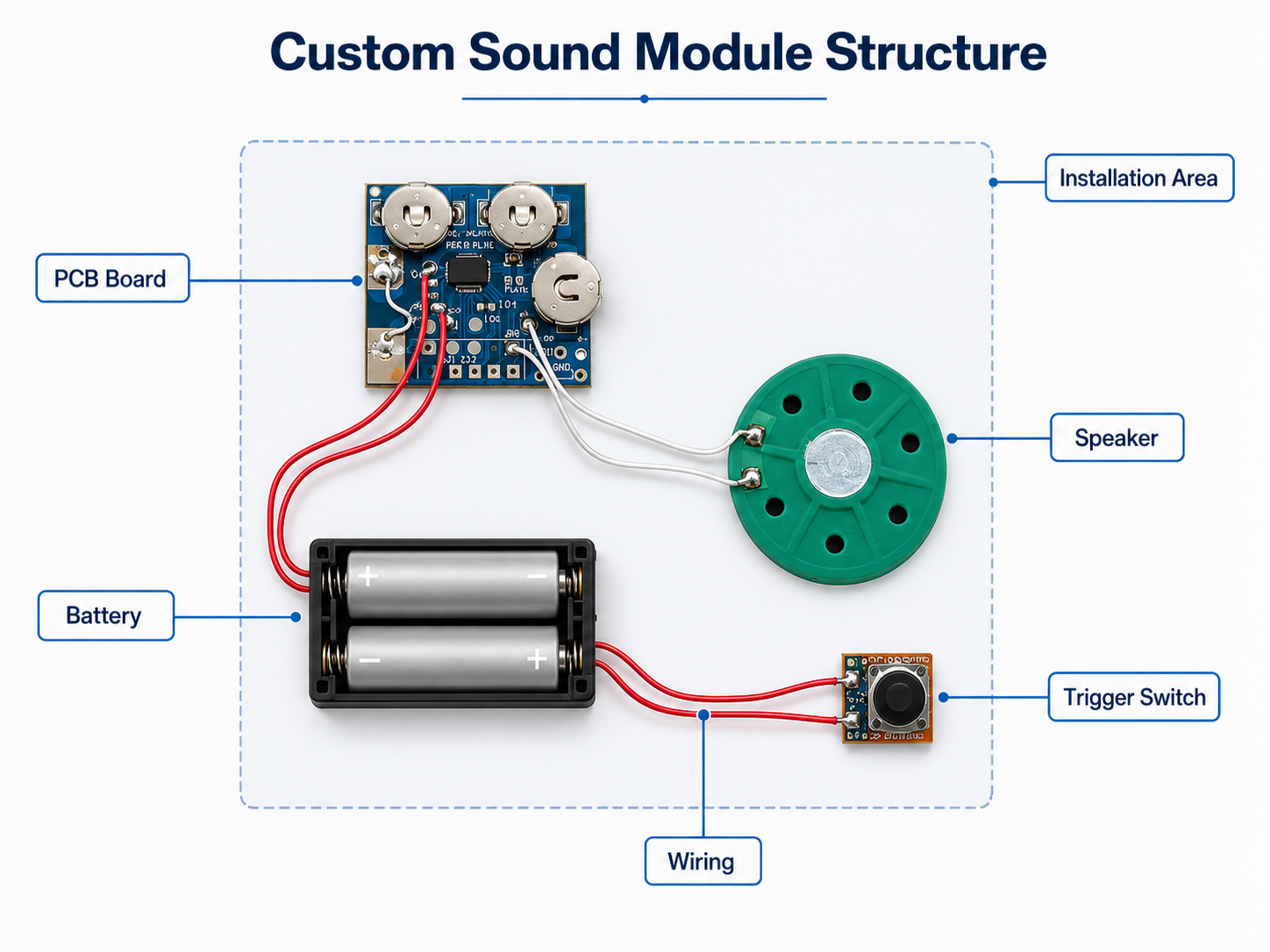
One of the most common sourcing problems is confirming the sound module before checking whether it fits the product.
Provide the available:
A simple internal drawing can help the supplier recommend a suitable board, speaker and battery arrangement.
Valsen’s catalogue includes musical greeting cards, light-up cards with sound, music boxes and semi-finished audio components for integration into printed products, gifts and other custom applications. Exact module specifications must be confirmed according to the project.
Not every product should use continuous playback.
Possible playback settings include:
A greeting card may only need one complete playback. A retail display may require repeated playback, while a toy may need several buttons or audio tracks.
Confirm the playback logic before the circuit and button layout are finalized.
The module should not be approved only as a loose electronic component. It should also be tested after installation inside the final product structure.
The sample test should include:
Testing the complete product helps identify structural interference, weak sound output or unstable trigger performance before mass production.
Prepare the following information:
Clear specifications allow the supplier to recommend a more suitable module and reduce unnecessary sample revisions.
A reliable custom sound module begins with a complete project brief.
Confirm the application, audio duration, trigger method, speaker position, battery, installation space and playback logic before sampling. Then test the module inside the complete product rather than approving the electronic component alone.
Share the application, trigger method, audio duration and available installation space for a module recommendation.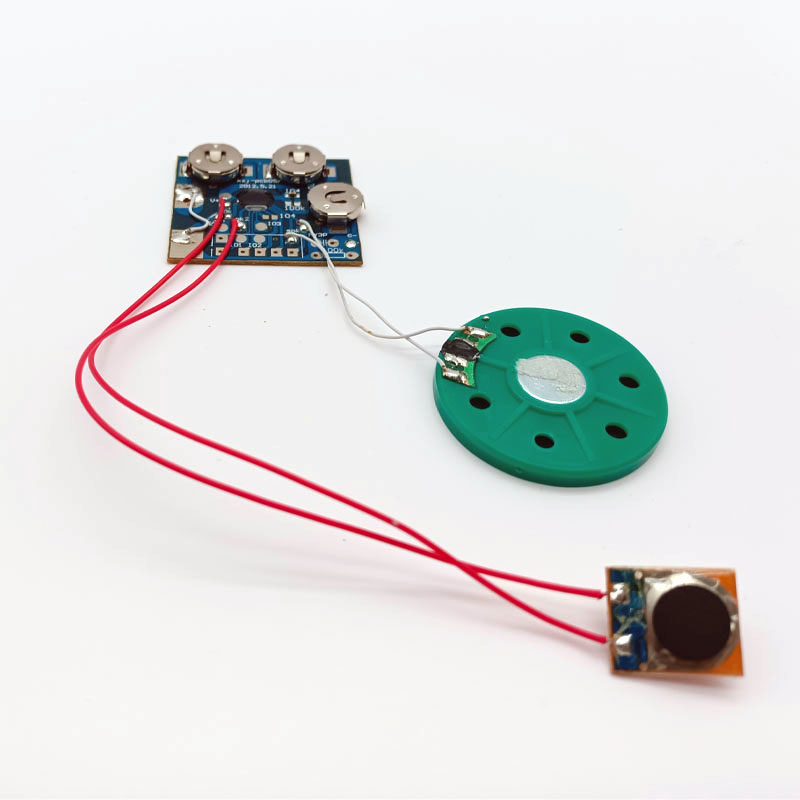
You should provide the application, audio file, audio duration, trigger method, playback logic, installation space, speaker position, battery preference and required quantity.
Some custom configurations may support multiple tracks or buttons, but the required playback sequence and control method must be confirmed before development.
Paper, foam, fabric or plastic may block the sound outlet. The speaker position and surrounding structure should be tested in the complete sample.
Yes. Buyers should test the audio, trigger, battery, speaker volume, module fit and repeated operation inside the final product structure.
 EN
EN
 AR
AR BG
BG HR
HR CS
CS DA
DA NL
NL FI
FI FR
FR DE
DE EL
EL HI
HI IT
IT JA
JA KO
KO NO
NO PL
PL PT
PT RO
RO RU
RU ES
ES SV
SV IW
IW ID
ID LV
LV LT
LT SR
SR VI
VI SQ
SQ ET
ET HU
HU TH
TH TR
TR FA
FA MS
MS